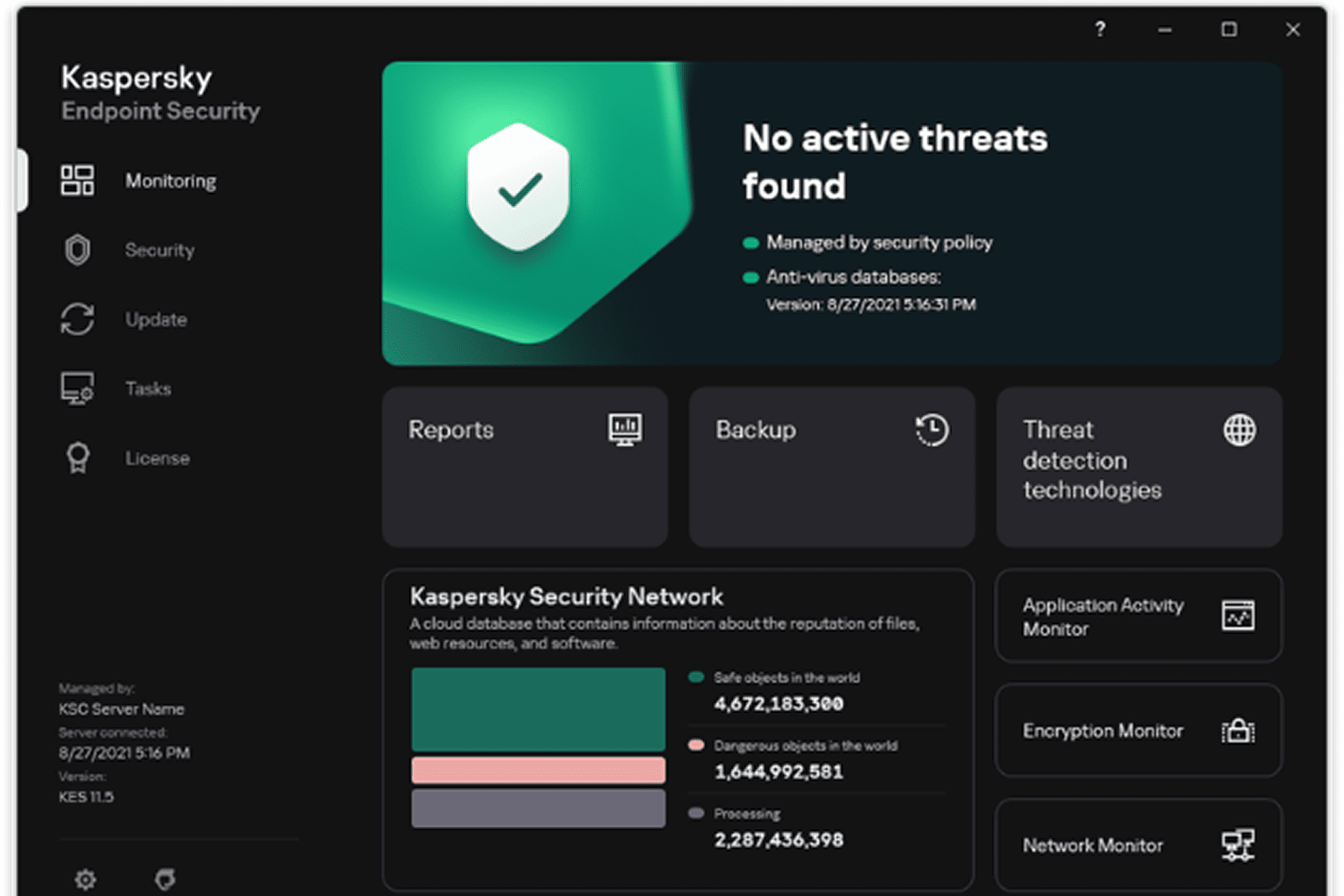
Discover how its Next-Gen capabilities, EDR Optimum, and centralized management protect businesses from advanced cyber threats.)
Explore the architectural insights and core features of Kaspersky Endpoint Security.
In today’s volatile threat landscape, traditional antivirus is no longer enough. Kaspersky Endpoint Security offers a multi-layered, Next-Gen cyber defense platform designed to protect, detect, and respond to complex threats targeting corporate endpoints, including workstations, servers, and mobile devices.
Kaspersky’s security stack relies on multiple proactive, reactive, and behavioral layers to ensure comprehensive security across the threat lifecycle:
Scans all files opened, launched, or saved on the system, eliminating traditional malware threats.
Continuously monitors application activities in real-time. If an unauthorized encryption attempt (Ransomware) is detected, Kaspersky blocks the process and automatically rolls back malicious changes.
Prevents malware from exploiting unpatched software and Zero-day vulnerabilities within the operating system or common applications.
Kaspersky Security Network (KSN) A cloud-based global threat intelligence network that delivers real-time verdicts on emerging threats within seconds.
Key Features Kaspersky
Endpoint Detection and Response (EDR) Optimum Upgrades your defense from simple prevention to advanced threat hunting and visibility. Root Cause Analysis Provides a clear, visual investigation tree illustrating how a threat entered the network (e.g., via phishing email), what processes it triggered, and how it affected other endpoints.
Vulnerability and Patch Management
Automatically scans for software vulnerabilities within operating systems and third-party applications.
Centralizes patch deployment to close security gaps before attackers can exploit them.
Web, Device, and Adaptive Anomaly Control
Web Control Restricts or blocks access to malicious or non-work-related websites.
Device Control Regulates the use of removable media (USB drives), Wi-Fi networks, and external devices to mitigate data exfiltration risks.
Flexible and Centralized Management
Administrators can oversee the entire endpoint infrastructure through Kaspersky Security Center, available in two deployment models:
On-Premises Console : Installed locally within the corporate network for organizations requiring full data sovereignty.
Cloud-Based Console : Hosted by Kaspersky, eliminating hardware overhead and enabling seamless remote management from anywhere.
Interested in learning more about our products and solutions?